All published articles of this journal are available on ScienceDirect.

Oral Health and Hospital Infections: A Scope Review of the Performance of Dentists in Intensive Care Units
 iD
Áurea Luz Felícia Marques Miécimo da Silva1 , *
Marcelo Ferreira da Silva1 , *
Sirlei Moura de Almeida Maggioni1 , *
Celso Oliveira de Sousa2
Flávio Rodrigues Ferreira Alves3
iD
Áurea Luz Felícia Marques Miécimo da Silva1 , *
Marcelo Ferreira da Silva1 , *
Sirlei Moura de Almeida Maggioni1 , *
Celso Oliveira de Sousa2
Flávio Rodrigues Ferreira Alves3
Authors Info & Affiliations
Abstract
Introduction
Oral health plays a crucial role in preventing hospital-acquired infections, particularly among critically ill patients admitted to Intensive Care Units (ICUs). In these environments, the oral cavity may act as a reservoir for pathogenic microorganisms capable of triggering systemic infections such as ventilator-associated pneumonia and sepsis. This study aimed to analyze the available scientific evidence on the role of dentists in preventing hospital infections in ICU patients and to evaluate the impact of hospital dentistry interventions on clinical outcomes.
Methods
This scoping review was conducted based on a search of PubMed, SciELO, and Google Scholar databases, following the steps of identification, screening, and eligibility of studies. Titles, abstracts, and full texts were reviewed by two independent reviewers, with a third reviewer resolving disagreements. Ten studies were selected, ranging from observational evaluations to clinical trials and quasi-experimental studies, involving hospitalized adult, pediatric, and convalescent patients.
Results
The included studies showed that dental interventions were associated with reduced respiratory infections, especially ventilator-associated pneumonia, along with lower systemic complications and hospital mortality.
Discussion
The evidence highlights the importance of integrating dentists into multidisciplinary ICU teams to strengthen infection prevention strategies and improve patient safety through structured oral health protocols.
Conclusion
The inclusion of dentists in ICUs is essential for preventing hospital infections and improving clinical outcomes, reinforcing the need for standardized protocols, specialized training, and public policies supporting hospital dentistry.
1. INTRODUCTION
Oral health plays a fundamental role in maintaining the overall well-being of individuals and is especially relevant in hospital settings, where critically ill patients are more susceptible to complications arising from infections. In Intensive Care Units (ICUs), patient vulnerability is even greater due to immunosuppression, invasive procedures, and prolonged use of devices such as mechanical ventilators, all of which increase the risk of hospital-acquired infections. These environments present characteristics that promote the colonization and proliferation of pathogenic microorganisms, particularly in the oral cavity, which often serves as a reservoir for opportunistic bacteria [1].
The most common oral manifestations observed in patients during hospitalization include perioral pressure ulcers, macroglossia, blisters, and oral candidiasis, conditions that may be associated with both prolonged hospitalization and the use of specific devices and treatments. Perioral pressure ulcers often develop from the prolonged use of feeding tubes, leading to painful lesions and making eating and speaking difficult. Macroglossia, in turn, can result from inflammatory processes or improper positioning during hospitalization, causing discomfort and a risk of airway obstruction. Oral blisters may be related to drug reactions, mucosal fragility, or local trauma. Oral candidiasis, a fungal infection common in immunosuppressed patients or those undergoing prolonged antibiotic therapy, manifests as painful whitish plaques that compromise swallowing and general well-being. These changes reinforce the importance of systematic monitoring of oral health during hospitalization to prevent complications and ensure a better quality of life for the patient [2].
Among these infections, those of oral origin deserve special attention because the oral cavity, functioning as a potential source of microorganisms, can facilitate the systemic spread of infectious agents, directly contributing to the development of pneumonia, septicemia, and other severe complications that negatively impact patients’ clinical outcomes. Furthermore, the presence of biofilms and the fragility of the oral mucosa in critically ill patients intensifies susceptibility to infections, making oral health a crucial component for the control and prevention of these conditions [3].
In this context, the dentist's role is essential in controlling and managing these infections through strict oral hygiene protocols, continuous monitoring of oral conditions, and early treatment of infectious foci. The inclusion of this professional in ICU multidisciplinary teams promotes integrated care, ensuring that the oral cavity receives specialized and continuous attention, which enhances patient safety and contributes to reducing the risk of associated complications. Structured dental interventions in ICUs not only decrease the prevalence of hospital infections but can also reduce length of stay and related costs, highlighting the importance of the systematic involvement of the dentist as an active member of intensive care teams. Promoting oral health in the hospital environment, especially among critically ill patients, is directly linked to improved clinical outcomes and quality of care [4].
Although the importance of dental care in ICUs is recognized by the scientific community and some healthcare institutions, significant challenges remain to effectively include dentists in multidisciplinary teams working in these settings. The absence of clear regulations, standardized protocols, and specific public policies limits the consolidation of this practice as a hospital routine, restricting the potential positive impact dentistry can offer in infection prevention and cost reduction related to infectious complications [5].
Moreover, training and qualification in hospital dentistry remain insufficient to meet the growing demand for specialized care for critically ill patients, compromising the quality of care and the expansion of this practice in the hospital setting. Another factor hindering the inclusion of dentists is the lack of institutional integration and organizational resistance to recognizing them as a fundamental part of the multidisciplinary intensive care team [6].
Therefore, it is necessary to analyze not only the clinical impact of dental care in ICUs but also institutional strategies and public policies that encourage and regulate the inclusion of this professional in these units. The implementation of clear guidelines, specific training programs, and the promotion of public policies that recognize and value dentists as members of multidisciplinary teams are essential steps to broaden comprehensive care for critically ill patients, ensuring oral health as an indispensable component for preventing hospital infections and improving clinical outcomes. This integrated approach represents a significant advance in the quality of intensive care, directly reflecting patient safety and health system efficiency [7].
This study aims to highlight the relevance of the dentist’s role in Intensive Care Units, emphasizing their contribution to the prevention and reduction of hospital infections originating from oral foci that may disseminate systemically, as well as analyzing the importance of public policies that promote the inclusion of this professional in multidisciplinary teams caring for critically ill patients.
2. MATERIALS AND METHODS
This research is characterized as a scoping review, conducted according to the methodological recommendations of the Joanna Briggs Institute (JBI) and in compliance with the Preferred Reporting Items for Systematic Reviews and Meta-Analyses extension for Scoping Reviews (PRISMA-ScR). The review protocol was not prospectively registered in a public database, as protocol registration is not mandatory for scoping reviews; however, all methodological steps were defined a priori and rigorously followed to ensure transparency and reproducibility.
The research question was structured using the PCC strategy (Population, Concept, and Context). In this approach, the population corresponds to patients admitted to ICUs, the concept refers to the role of the dentist in preventing hospital infections, and the context is the ICUs. Based on this structure, the guiding question was defined as: “What is the relevance of the dentist’s role in preventing hospital infections in patients admitted to Intensive Care Units?”
Inclusion criteria were established, encompassing original articles, reviews, and technical reports addressing oral health and dental practice in ICUs. Studies published in Portuguese and English, available in full text, without time restrictions, were accepted to ensure the broadest possible scope. Editorials, letters to the editor, clinical guidelines, consensus documents, and studies not directly related to the dentist’s role or hospital infection prevention in ICUs were excluded.
The search was conducted in the PubMed, Web of Science, Embase, and SciELO databases due to their broad coverage of scientific literature in health, international relevance, and diversity of indexed studies. PubMed was selected because it is the world's leading reference in biomedical research, offering access to standardized descriptors (MeSH) and high-quality articles. Web of Science and Embase were included because they complement the search with a broad multidisciplinary scope and strong indexing of clinical studies, ensuring greater sensitivity in identifying evidence on cross-infections and health practices. SciELO was used because it includes scientific production from Latin America, allowing for greater regional representation. The bibliographic search was conducted between March 1 and March 15, 2025, with all databases consulted during this predefined period.
In PubMed, the following strategy was used: (“Cross Infection” OR “Hospital Infections”) AND (“Dentists” OR “Intensive Care” OR “Intensive Care Units”) AND (“Oral Health” OR “Oral Hygiene Protocols”). In the other databases, the same descriptors were used, adapted to the controlled vocabulary of each platform to ensure accuracy and standardization in the retrieval of studies.
In the Web of Science database, the search was conducted in the Topic (TS) field, which includes the title, abstract, and keywords, using the following strategy: TS = (“Cross Infection” OR “Hospital Infections”) AND (“Dentists” OR “Intensive Care” OR “Intensive Care Units”) AND (“Oral Health” OR “Oral Hygiene Protocols”). This strategy allows for broad retrieval of studies relevant to the topic, with standardized descriptors in the English language.
In Embase, the search strategy was structured based on terms from the controlled Emtree vocabulary, combined with free-text terms in the title and abstract, as recommended to increase sensitivity: (‘cross infection’/exp OR ‘hospital infection’/exp) AND (‘dentist’/exp OR ‘intensive care’/exp OR ‘intensive care unit’/exp) AND (‘oral health’/exp OR ‘oral hygiene’/exp). The use of the /exp operator enabled the inclusion of related and hierarchically subordinate terms, ensuring comprehensiveness and precision.
In the SciELO database, which does not use a structured controlled vocabulary such as MeSH or Emtree, a strategy combining descriptors in English and Portuguese with Boolean operators was applied: (“Cross Infection” OR “Hospital Infection” OR “Infecção Hospitalar”) AND (“Dentists” OR “Dentistas” OR “Intensive Care” OR “Unidade de Terapia Intensiva”) AND (“Oral Health” OR “Saúde Bucal” OR “Oral Hygiene” OR “Higiene Oral”). This adaptation aimed to broaden the retrieval of studies published in Latin American and Ibero-American journals.
The Scopus database was not included in the search strategy because, despite its broad coverage and multidisciplinary nature, it shows a high degree of overlap with databases already selected, such as Web of Science and Embase, particularly regarding biomedical literature. Therefore, its exclusion aimed to avoid redundancy, streamline the screening process, and maintain a focus on databases that offer greater thematic specificity and controlled vocabulary relevant to health sciences and public health.
In contrast, Google Scholar was used selectively and as a complementary source to identify grey literature, including theses, dissertations, institutional documents, and articles not indexed in traditional databases. This controlled use helped expand the scope of the search without compromising methodological rigor, contributing to the identification of additional relevant evidence on the role of dentists in intensive care units in the context of oral health and hospital-acquired infections. Study selection was conducted in two stages: initially, titles and abstracts were screened, followed by full-text assessment of potentially eligible articles. All stages were performed independently by two reviewers, with a third reviewer consulted in cases of disagreement. The process of study identification, inclusion, and exclusion was presented through a flowchart based on the PRISMA-ScR model. Data extraction was performed using two standardized forms. The first included information on authors/year, country, study type, population/context, objectives, and main findings. The second focused on dental interventions, impact on the prevention or reduction of hospital infections, and related recommendations or public policies.
Study selection was conducted in two sequential stages. In the first stage, title and abstract screening was independently performed by two reviewers (Áurea Luz Felícia Marques Miécimo da Silva Miécimo and Thyago Oliveira Cardoso). In the second stage, full-text eligibility assessment was also carried out independently by the same reviewers. Disagreements at any stage were resolved through discussion, with the participation of a third reviewer (Marcelo Ferreira da Silva Silva) when necessary.
The bibliographic search resulted in the retrieval of 175 records, including 67 from PubMed, 40 from Web of Science, 13 from Embase, 38 from SciELO, and 17 from Google Scholar. At this stage, no automatic filters were applied regarding language, study type, or publication period, in order to maximize the sensitivity and comprehensiveness of the search.
Data extraction was performed using two standardized forms. The extraction process was conducted independently by two reviewers (Áurea Luz Felícia Marques Miécimo da Silva Miécimo and Sirlei Moura de Almeida Maggioni). The first included information on authors/year, country, study type, population/context, objective, and main findings. The second addressed dentists’ interventions, their impact on the prevention or reduction of hospital-acquired infections, and related recommendations or public policies.
The synthesis of results was presented narratively and descriptively, using tables to facilitate data visualization. This approach allowed organizing findings by thematic categories, identifying knowledge gaps, and analyzing the strategic role of dentists in ICUs. Furthermore, it enabled discussion of the importance of public policies and multidisciplinary practices aimed at preventing hospital infections originating from oral foci in critically ill patients.
The risk of bias assessment was not conducted because, according to the PRISMA-ScR guidelines, scoping reviews do not primarily aim to evaluate methodological quality or critically appraise the risk of bias of the included studies. This type of review aims to map, describe, and synthesize the available body of evidence on a given topic, regardless of study design. Therefore, the present investigation focused on identifying, organizing, and interpreting the existing evidence, without applying specific tools for risk of bias assessment, in accordance with the proposed methodological scope.
3. RESULTS
The flowchart shown in Fig. (1) details the process of study identification, screening, eligibility assessment, and inclusion in the scoping review. Initially, 175 studies were found across the databases (67 from PubMed, 40 from Web of Science, 13 from Embase, 38 from SciELO, and 17 from Google Scholar). After removing 63 duplicate records, 112 studies proceeded to screening by title and abstract review, resulting in the exclusion of 64 studies that did not meet the inclusion criteria. Subsequently, 48 studies were assessed in full text, with 28 excluded for not fitting the research scope or the established methodological criteria. Finally, 10 studies were included in the review, comprising the final sample for data extraction.
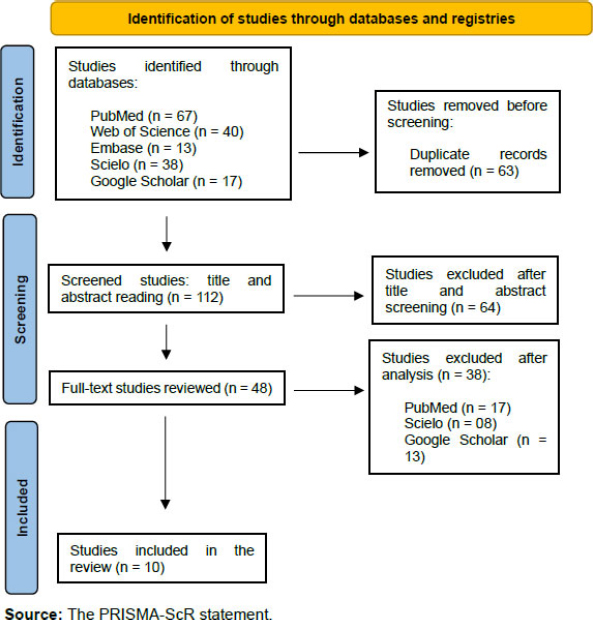
PRISMA-ScR flowchart of studies for sampling, 2025.
Table 1 shows a predominance of research conducted in Brazil, especially in ICUs, with various methodological approaches including observational, descriptive, narrative, and bibliographic reviews, as well as clinical trials and quasi-experimental studies. The studies cover diverse populations, ranging from adult and pediatric ICU patients to hospitalized convalescent patients. Overall, the main findings highlight the importance of hospital dental assessment, demonstrating that the involvement of a dentist helps to early identify oral changes, reduce systemic complications, prevent respiratory infections such as ventilator-associated pneumonia, and reinforce the need to integrate dentistry into multidisciplinary teams.
Table 2 organizes the studies according to the actions performed by professionals, the observed impacts on the prevention or reduction of hospital infections, and the recommendations or implications for public policies. Interventions range from basic dental care in wards to the implementation of systematic oral hygiene protocols and preventive management in pediatric and adult ICUs. The most relevant impacts reported include the reduction of respiratory infections, especially nosocomial pneumonia and VAP, as well as decreased hospital mortality in critical patients and the early identification of dental needs. Finally, the recommendations emphasize the importance of the dentist’s involvement in multidisciplinary teams, suggest adopting continuous dental assessment protocols, and encourage public policies to expand hospital dentistry at different levels of care.
| Study ID/ Refs. | Authors/Year | Country | Study Type | Population/Context | Objective | Main Findings |
|---|---|---|---|---|---|---|
| A1, [8] | Amaral et al. (2018) | Brazil | Observational | Patients admitted to hospital wards | To assess the oral health status of hospitalized patients | Evidences prevalence of oral alterations and reinforces the need for hospital dentistry |
| A2, [9, 10] | Austríaco-Leite et al. (2018) | Brazil | Observational | Pediatric ICU | To evaluate oral health in critically ill pediatric patients | High frequency of oral alterations and need for dental evaluation |
| A3, [9,10] | Bellissimo-Rodrigues et al. (2018) | Brazil | Randomized clinical trial | Adult ICU patients | To assess the effect of dental intervention on respiratory infection prevention | Significant reduction in LRTI; VAP (ventilator-associated pneumonia) nearly halved; mortality similar between groups |
| A4, [11] | Kapila (2021) | International | Review | Special populations | To link periodontal diseases to systemic conditions | Reinforces the interrelation between oral and systemic health in hospitalized patients |
| A5, [12] | Silva et al. (2021) | Brazil | Narrative review | ICU patients | To highlight the role of oral care in preventing secondary infections | Evidences the importance of the integrated dentist's role in the ICU, preventing ventilator-associated pneumonia |
| A6, [13] | Meneses et al. (2022) | Brazil | Literature review | Adult ICU | To explore the importance of dentists in preventing oral infections in the ICU | Strengthens evidence of the preventive role of dentists in critical care settings |
| A7, [14] | Oliveira and Gomes et al. (2022) | Brazil | Descriptive study | Adult ICU | Focus on the prevention of nosocomial pneumonia | Highlights the relevance of oral hygiene for reducing complications in the ICU |
| A8, [15] | Ribeiro (2022) | Brazil | Quasi-experimental study | 355 patients in 2 ICUs | To evaluate the impact of dentistry on mortality and ventilator-associated pneumonia |
Mortality reduced to 28.7% (p=0.015); no significant change in VAP |
| A9, [16] | Steinle et al. (2023) | International | Observational | Adult ICU patients | Association between oral health, length of stay, and mortality |
Poor oral health is associated with higher mortality and prolonged hospitalization |
| A10, [17] | Todayama (2024) | International | Descriptive | Hospitalized convalescent patients | To characterize systemic and oral profiles during hospitalization | Shows a high prevalence of dental needs during geriatric hospitalization |
| Studies/Refs. | Dentist Interventions | Impact on Prevention or Reduction of Hospital Infections | Related Recommendations or Public Policies |
|---|---|---|---|
| A1, [8] | Dental care in hospital wards | Significant prevalence of oral alterations in patients | Indicates the need for policies to expand hospital dentistry |
| A2, [9] | Dental assessment and management in the pediatric ICU | Early identification of oral alterations and prevention | Recommends routine dental evaluation in pediatric ICUs |
| A3, [10] | Systematic dental intervention in the ICU | Significant reduction in respiratory infections and VAP | Advocates for dentist involvement in the multidisciplinary ICU team |
| A4, [11] | Multimodal approach to periodontal diseases | Reduction of systemic effects related to periodontal diseases | Encourages integration of oral and systemic health |
| A5, [12] | Control of oral microbiota; oral hygiene in ICU patients | Prevention of secondary infections, especially pneumonia | Emphasizes the need for dentist integration in hospital teams |
| A6, [13] | Prevention of oral infections in critical care | Evidence of the dentist's preventive role | Reinforces the importance of the dentist in ICUs |
| A7, [14] | Intensified oral hygiene in the ICU | Reduction of nosocomial pneumonia | Recommends routine oral care in the ICU |
| A8, [15] | Preventive dental care | Decrease in hospital mortality among critical patients | Suggests inclusion of dentistry as routine in ICUs |
| A9, [16] | Monitoring oral health during hospitalization | Association between poor oral health, mortality, and length of stay | Suggests protocols for dental evaluation in ICUs |
| A10, [17] | Dental treatment during geriatric hospitalization | High prevalence of detected dental needs | Recommends continuous dental care for hospitalized patients |
Source: Own elaboration, 2025.
Table 1 highlights considerable heterogeneity among the selected studies, manifested primarily in the methodologies used, the different population profiles, and the research settings. While some studies adopted observational or descriptive designs to identify the prevalence of oral alterations in hospitalized patients, others were structured as randomized clinical trials or quasi-experimental studies to evaluate the impact of dental interventions on clinical outcomes, such as ventilator-associated pneumonia and mortality. Furthermore, there is significant variation in the population studied, which includes adult and pediatric patients in the ICU, individuals admitted to hospital wards, and even geriatric patients convalescing in hospitals. This methodological and population diversity contributes to the breadth of the discussion, but also imposes limitations on direct comparisons between findings, as the clinical contexts and specific objectives of each study strongly influence the results. Thus, although all studies point to the importance of dental care in a hospital environment, the observed heterogeneity requires caution in generalizing the evidence and reinforces the need for more standardized research that allows for solid and comparable conclusions.
The integrated analysis of Tables 1 and 2 highlights how the selected studies complement one another, offering a comprehensive view of the dentist's role in ICUs. Together, there is a clear trend: the involvement of the dentist in hospital wards and especially in ICUs significantly contributes to the prevention of respiratory infections, reduction of systemic complications, and potential decrease in hospital mortality.
Moreover, the data reinforce the need to incorporate hospital dentistry as an integral part of multidisciplinary teams, adopting standardized protocols and encouraging public policies that promote its institutionalization. This correlation between scientific evidence and practical recommendations supports the relevance of strategies aimed at expanding dental care in ICUs, strengthening both patient safety and the quality of care provided.
4. DISCUSSION
4.1. Impact of Oral Health on the Prevention of Hospital-acquired Infections in ICUs
In the article A8, the impact of oral health on preventing hospital-acquired infections in ICUs is widely documented in the scientific literature and has become a crucial focus for the safety of critically ill patients. The oral cavity can serve as an important reservoir of pathogenic microorganisms, including gram-negative bacteria, fungi, and viruses, capable of spreading to other body systems [8]. In the article A9, in ICU patients, especially those undergoing mechanical ventilation, immunosuppressed, or with severe clinical conditions, the migration of these pathogens can trigger severe systemic infections such as VAP and sepsis, significantly increasing hospital morbidity and mortality rates. Therefore, maintaining oral health is no longer a secondary practice but a strategic element in preventing healthcare-associated infections [9].
In the article A10, the implementation of oral hygiene protocols in critically ill patients, particularly when supervised or performed by dentists, results in a marked reduction of the bacterial load present in the oral cavity. Colonization of pathogenic microorganisms in dental biofilm and on the tongue represents a direct pathway for the aspiration of infectious agents into the respiratory tract, being one of the main risk factors for VAP [10]. In the article A11, dental interventions such as periodic prophylaxis, tartar removal, biofilm control, and elimination of infectious foci, such as abscesses and compromised teeth, have shown significant protective effects, reducing the occurrence of infectious complications and contributing to the clinical stabilization of patients [11].
In the article A12, beyond the direct prevention of infections, adequate oral health in ICUs is associated with indirect benefits that impact both the patient and the healthcare system. Research indicates that effective control of the oral cavity reduces the average length of hospital stay and decreases the need for prolonged antibiotic therapy, helping to combat antimicrobial resistance [12]. In the article A13, the dentist’s role, by integrating multidisciplinary care strategies, enhances hospital infection prevention protocols, enabling early interventions and preventing the progression of infectious conditions that could lead to severe systemic complications [13].
In the article A14, another relevant aspect is the relationship between oral health and quality of life during hospitalization. Patients receiving appropriate dental care experience less discomfort, better immune response, and a lower risk of aspiration of contaminated secretions [14]. In the article A15, multicenter studies suggest that the systematic implementation of oral health programs in ICUs can reduce the incidence of VAP by up to 40%, making it an effective, low-cost measure to prevent hospital complications. These data reinforce the view that the dentist's involvement should not be seen merely as an auxiliary strategy but as an essential, evidence-based practice within the intensive care context [15].
In the article A16, thus, integrating oral health into ICU care routines goes beyond the dental dimension and constitutes a systemic-impact intervention [16]. In the article A17, the involvement of the dentist ensures continuous and specialized monitoring of the oral cavity, preventing pathogen spread and contributing to the reduction of severe hospital-acquired infections, with positive effects on clinical outcomes, length of stay, and hospital costs. In this context, hospital dentistry establishes itself as an indispensable ally in promoting patient safety and quality of care in highly complex environments [17].
4.2. Dentist’s Contributions to Multiprofessional Intensive Care Teams
The role of the dentist within multiprofessional ICU teams is increasingly recognized as an indispensable component for promoting patient safety and quality of care. In highly complex environments where clinical vulnerability is extreme, systematic dental monitoring enables the implementation of individualized oral hygiene protocols capable of preventing serious complications such as VAP and other odontogenic infections that can progress to sepsis [18]. The oral cavity of critically ill patients often provides favorable conditions for bacterial proliferation, including xerostomia, immobility, broad-spectrum antibiotic use, and immunosuppression. In this context, the dentist's involvement enables a preventive and therapeutic approach that significantly reduces the risk of microbial dissemination to other body systems [19].
The dentist not only identifies and treats oral lesions but also continuously monitors the oral condition, enabling adjustments in care according to the patient’s clinical progression. This constant vigilance prevents the worsening of pre-existing conditions such as periodontal disease, deep caries, and abscesses, which can become sources of systemic infection [20]. Patients who undergo oral hygiene protocols conducted by specialized professionals exhibit lower rates of infectious complications, shorter mechanical ventilation duration, and often shorter hospital stays. By contributing to the control of the oral microbiological environment, the dentist also helps reduce the indiscriminate use of antimicrobials, a practice directly related to the emergence of multidrug-resistant strains in hospitals [21].
Another central point is the integration of the dentist into multiprofessional care routines. Their participation in clinical meetings, case discussions, and therapeutic planning facilitates a truly interdisciplinary approach in which oral health is no longer neglected but becomes part of comprehensive care for the critically ill patient. This collaboration fosters synergy among different fields, allowing the dentist to work alongside physicians, nurses, physical therapists, and speech therapists in infection prevention and rehabilitation optimization. The joint action strengthens the understanding that oral health is not a secondary issue but a determining factor in the clinical evolution and prognosis of patients [22].
The inclusion of dentists in ICUs encourages the development of more robust institutional protocols that standardize preventive practices and ensure traceability of care. This institutionalized practice improves care indicators, reduces morbidity and mortality associated with hospital infections, and optimizes healthcare costs, since preventing complications avoids expenses related to prolonged antimicrobial therapies, reinterventions, and extended hospital stays. Thus, dental work in ICUs not only strengthens individual patient care but also represents a strategic measure in hospital management [23].
Therefore, the role of the dentist within multiprofessional intensive care teams extends beyond isolated dental interventions, becoming an essential element of comprehensive care for critically ill patients. By acting in prevention, monitoring, and treatment of oral conditions, this professional contributes to lowering hospital infection rates, improving clinical prognosis, and reinforcing the concept of integrated care, where each specialty contributes efforts to ensure safety and treatment effectiveness [24]. This reality shows that the involvement of dentists in ICUs should not only be recommended but also incorporated into hospital policies and practices as a consolidated strategy for healthcare quality [25].
4.3. Public Policies and Strategies for the Insertion of the Dentist in ICUs
Public policies and strategies aimed at integrating dentists into ICUs play a fundamental role in consolidating care practices focused on patient safety and hospital infection prevention. Systematic dental care in critically ill patients, especially those on mechanical ventilation, is directly related to reducing infectious foci in the oral cavity, which often act as entry points for bacteria causing pneumonia and sépsis [26].
Despite these benefits, significant gaps remain in the Brazilian context regarding the regulation and implementation of public policies ensuring the involvement of dentists in multiprofessional intensive care teams [27]. Current regulations, such as the Federal Council of Dentistry Resolution No. 162/2015, recognize the specialty of Hospital Dentistry but do not mandate or establish national parameters for their inclusion in ICUs, leaving the decision largely to each institution [28].
Institutional experiences from hospitals that have already incorporated dentists into their routines demonstrate significant positive clinical and economic impacts. Studies report reductions in VAP incidence, decreased average length of stay, and consequent cost savings related to prolonged secondary infection treatments [29]. Moreover, the integrated work of dentists with physicians, nurses, and physical therapists enables the implementation of standardized oral hygiene protocols, continuous monitoring of oral lesions and infections, and early interventions that prevent systemic spread of microorganisms. These results reinforce that public policies for including dental professionals in ICUs should not be viewed merely as a professional demand but as a public health strategy aimed at improving care quality and safety for critically ill patients [30].
Despite isolated advances, significant challenges remain to consolidate this practice as routine in hospitals. These include the absence of standardized national guidelines for dental practice in intensive care, the scarcity of training and residency programs in Hospital Dentistry, and difficulties in funding and creating public and private positions for dentists in general hospitals [31]. Another critical point is the low integration between managers and multiprofessional teams in developing institutional protocols, resulting in isolated actions dependent on individual hospital and professional initiative. Thus, effective public policies must encompass not only the formal regulation of dentists’ involvement in ICUs but also promote specialized training, the development of national clinical protocols, and incentives for funding programs that enable this professional integration [32].
Therefore, consolidating the involvement of dentists in ICUs depends on coordination between science, management, and public policies [33]. Regulatory bodies such as the Ministry of Health, together with the Federal Council of Dentistry and medical and multiprofessional societies, must advance the creation of standards that regulate hospital dental practice, ensuring not only implementation but also monitoring and impact assessment [34].
Experience accumulated in institutions already applying this practice shows that systematic inclusion of dentists in ICUs not only significantly reduces hospital infections but also strengthens patient safety principles, reduces hospital costs, and improves clinical outcomes [35]. Investing in the creation of solid and sustainable public policies is thus an essential step to transform scientific evidence into a comprehensive and standardized care reality across the country [36].
The review has some limitations that should be highlighted. The heterogeneity among the studies, both in methodologies and in populations and clinical settings, makes direct comparison and synthesis of evidence difficult [37]. Furthermore, potential publication bias and the scarcity of high-quality methodological research, such as representative randomized clinical trials, may compromise the robustness of the findings [38]. These limitations require caution in interpreting the results and indicate that the conclusions should be applied with caution, reinforcing the need for more rigorous and standardized future studies on the importance of oral care in hospitalized patients [39].
4.4. Synthesis of Evidence and Future Research Opportunities
Collectively, the studies reviewed demonstrate a consistent and convergent body of evidence highlighting the central role of oral health in preventing hospital-acquired infections in ICUs. Despite differences in methodological design, populations, and institutional contexts, the findings consistently indicate that the oral cavity functions as a critical reservoir for pathogenic microorganisms and that structured oral hygiene protocols, particularly those led by dentists, are associated with reduced incidence of VAP, sepsis, length of hospital stay, antimicrobial use, and overall morbidity. Together, these results reinforce the understanding that oral health care in ICUs is not an isolated or auxiliary intervention, but rather a systemic and strategic component of patient safety, infection control, and quality of care within highly complex hospital environments.
However, the synthesis of the reviewed literature also reveals important gaps and opportunities for future research. There is a notable scarcity of large-scale randomized clinical trials and standardized outcome measures, which limits the strength of causal inferences and hinders direct comparison between studies. In addition, variations in oral care protocols, frequency of interventions, professional responsibilities, and institutional policies highlight the need for consensus-based clinical guidelines. Further research is also needed to explore cost-effectiveness analyses, long-term outcomes, implementation barriers, and the impact of oral health interventions across different healthcare systems and socioeconomic contexts. Addressing these gaps will be essential to strengthening the evidence base and supporting the development of robust public policies and standardized practices that fully integrate dentists into intensive care teams.
CONCLUSION
The scoping review highlighted the importance of oral health in preventing hospital-acquired infections in intensive care units, as the oral cavity serves as a reservoir for pathogenic microorganisms that can increase the risk of serious complications such as ventilator-associated pneumonia and sepsis. Dentist-led oral hygiene protocols reduce bacterial load, infection rates, and length of hospital stay, in addition to improving patients’ quality of life. The participation of dentists in multidisciplinary teams strengthens the interdisciplinary approach and contributes to reducing morbidity and mortality; however, systematic implementation faces challenges, including the lack of national guidelines and adequate public policies. Consolidating this practice requires regulations, specialized training, and standardized protocols, translating scientific evidence into safe and effective care.
AUTHORS' CONTRIBUTIONS
The authors confirm contribution to the paper as follows: T.C., Á.S.: Study conception and design; Á.M.: Data collection; T.C., Á.M., M.S.: Analysis and interpretation of results; Á.M., S.M., F.A.: Manuscript draft: - advisor; participated in all stages of the study and contributed to the conception, data collection, analysis, and writing. All authors reviewed the results and approved the final version of the manuscript.
LIST OF ABBREVIATIONS
| ICUs | = Intensive Care Units |
| JBI | = Joanna Briggs Institute |
| PCC | = Population, Concept, and Context |
| PRISMA-ScR | = Preferred Reporting Items for Systematic Reviews and Meta-Analyses extension for Scoping Reviews |
| VAP | = Ventilator-associated pneumonia |
AVAILABILITY OF DATA AND MATERIALS
The data of current study are available from corresponding author, [T.C], on a reasonable request.
ACKNOWLEDGEMENTS
The authors would like to express their deepest gratitude to their advisor, Dr. Flávio Alves, and his entire team for their continuous support, valuable guidance, and trust throughout the development of this work.
They also extend their sincere appreciation to the Graduate Program in Dentistry at Unigranrio University for the opportunity, the resources provided, and the academic environment that played a fundamental role in the completion of this research on oral and systemic health.